Let's open with one sentence: no door is "unbreakable." What security products actually measure isn't whether they can be opened, but how long it takes and how much noise it makes to open them. That's exactly the logic behind international test standards too: resistance for a set duration against a defined set of tools.
Methods of forced entry and their countermeasures
The methods encountered in the field are limited in number, and each has a different countermeasure working against it:
| Method | Target | Countermeasure |
|---|
| Prying with a crowbar | Leaf-to-frame gap | Multi-point locking, fixed pins on the hinge side |
| Snapping the cylinder | Protruding cam | Break-point cylinder, flush-mounted installation, steel escutcheon |
| Drilling | Lock body | Hardened steel ball-bearing reinforcement |
| Key copying | The key itself | Card-registered, anti-copy cylinder |
| Ripping out the frame | Wall anchoring | Proper anchoring, load-spreading plate |
Notice something: two of these countermeasures have nothing to do with the lock itself. The security chain doesn't start at the lock — it starts at the wall. A perfect lock means little in a loosely anchored frame.
What does multi-point locking actually change?
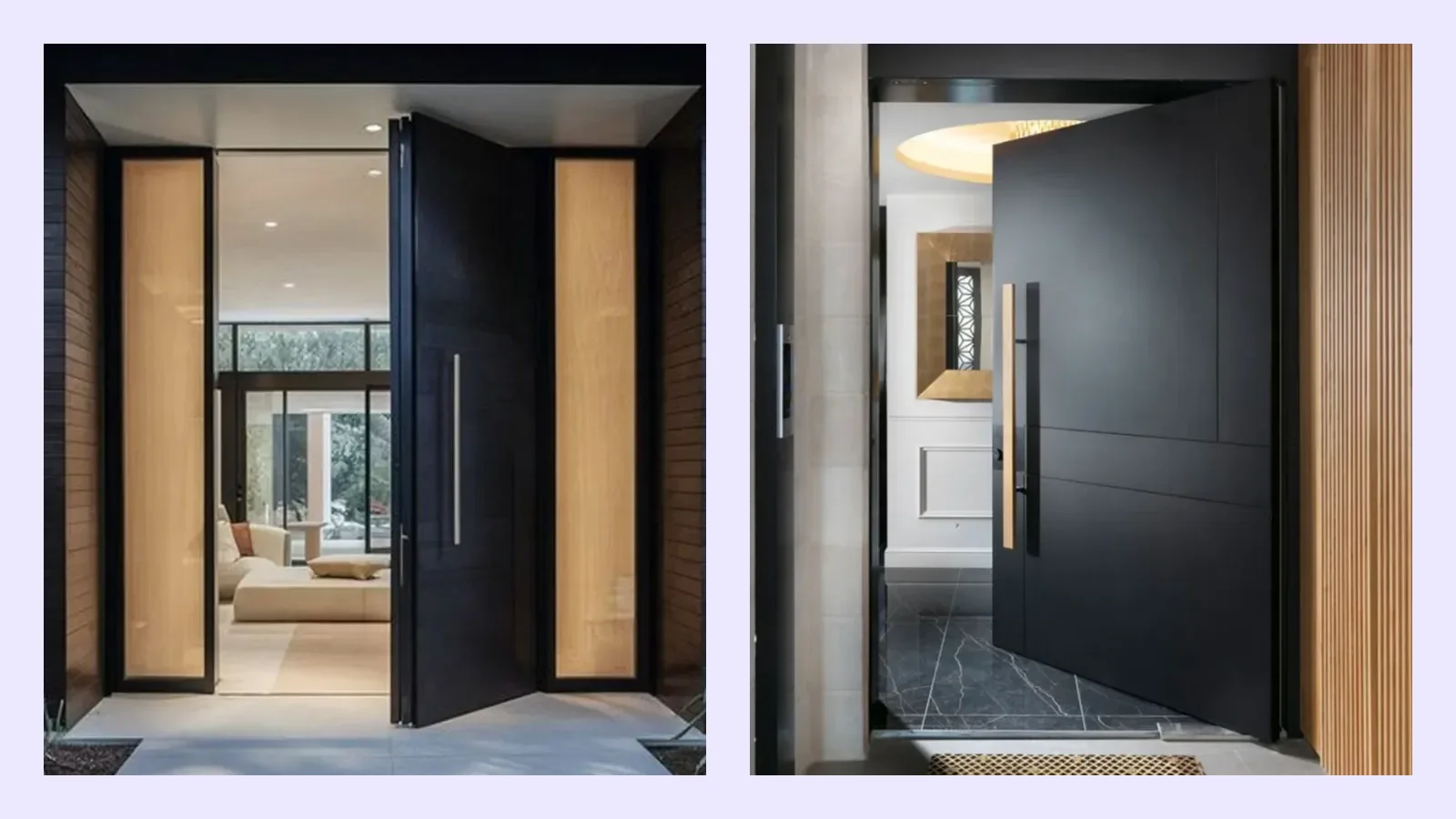
In a single-bolt lock, the leaf grips the frame at just one point, and all the leverage concentrates there. In a multi-point system, the leaf is drawn to the frame at the top, middle and bottom. This spreads the load against forced entry, and as a side benefit, evens out the seal pressure all the way around — meaning weathertightness improves too. We go into detail on our lock systems page.
Wondering what your own door needs? Send a photo of the door and the entrance via WhatsApp to 0532 689 21 46. In most cases we can tell just by looking; if a site survey is needed, it's free.
What do RC classes tell you — and what don't they?
The RC (Resistance Class) scale used in Europe rates how long a door resists a specific set of tools. Roughly: RC2 holds out for a few minutes against basic hand tools, RC3 for longer against heavier tools. Let's be honest here: these ratings are issued through accredited lab testing, and our products don't carry that kind of test certificate. If you see a claim like "RC3-level" in a catalogue, ask the seller for the actual test report — a class name is not a certificate.
What we do instead is different: we tell you plainly which component we chose and why. Body sheet thickness, lock type, cylinder class, number of hinges and frame anchoring — all of it appears line by line in the quote.
A realistic expectation
A good entrance door's job isn't to present an impossible wall to a burglar — it's to make the job take longer, get louder, and become discouraging. The combination that works best in the field is: solid frame anchoring + multi-point lock + break-point cylinder + visible lighting. Add a camera and the deterrent effect climbs noticeably.
Balancing security with glazed sections
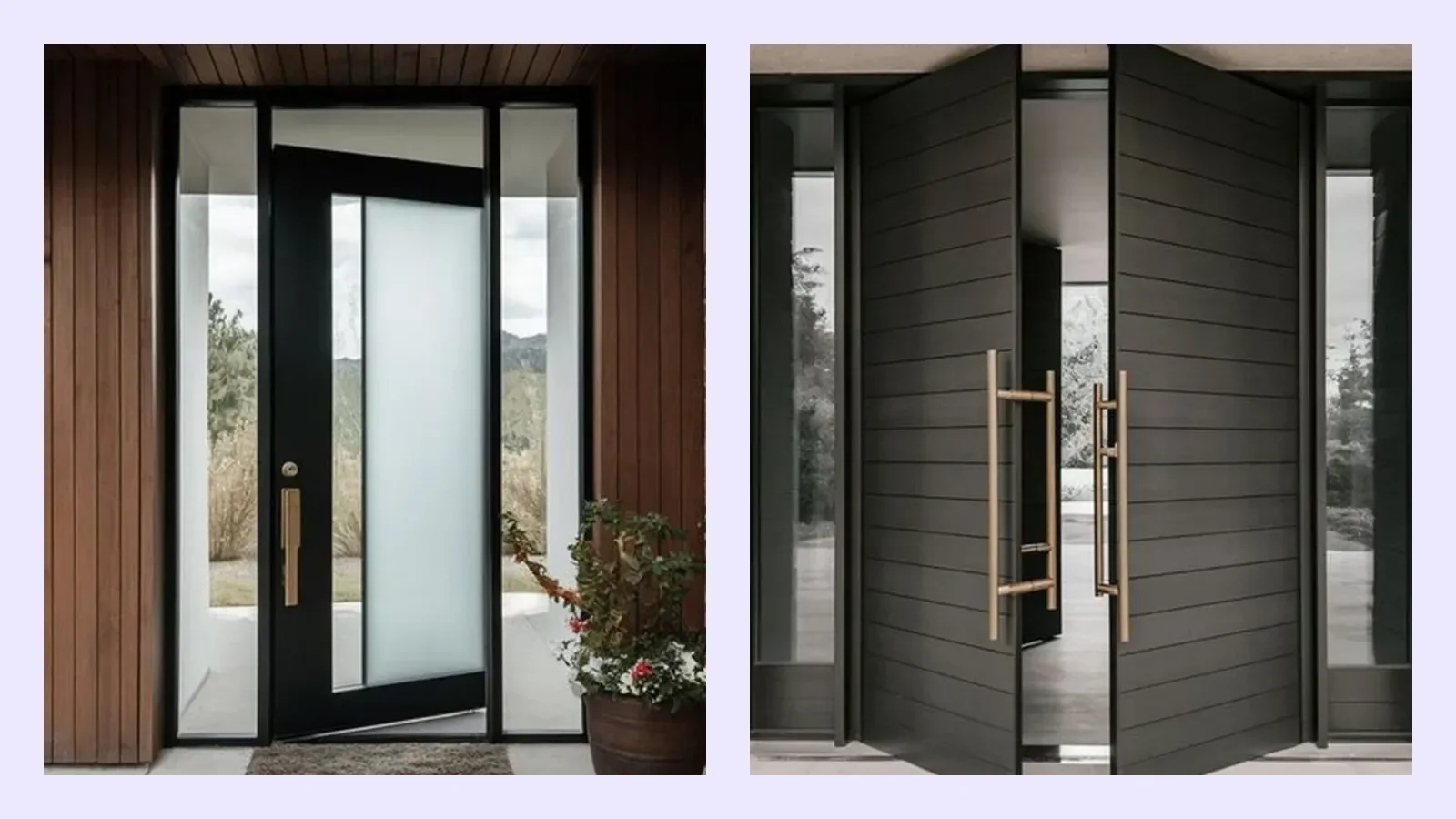
When a villa door with glass is requested, the first question is always the same: "doesn't that reduce security?" The answer depends on the glass. Laminated glass works through an interlayer film between two panes; when it breaks, it doesn't fall apart — the film holds the pieces in place, so no gap opens up. Tempered glass resists impact better but empties out completely once it breaks.
Our preference for exterior doors is laminated. Beyond that, the position of the glazed section matters too: glass right next to the handle can let someone reach in and open the door once it's broken. That's why we keep the glazed area away from the lock line, and add wrought iron in front of it when needed.
Frequently Asked Questions
Is an expensive lock always more secure?
Price alone isn't a reliable indicator. Whether the cylinder has a break point, whether it has anti-copy protection, and how many points the lock engages at are far more decisive. A well-chosen mid-range set outperforms a poorly chosen expensive one.
Can I strengthen the lock on my existing door?
In most cases, yes. Replacing the cylinder, adding a steel escutcheon and bolting the strike plate to the wall with long screws are relatively small jobs with a big payoff.
Does a smart lock reduce security?
Not in systems with a mechanical backup. Only in setups that run purely on electronics with no mechanical override do you need to plan ahead for power and battery scenarios.
Let's review your door together
Spotting the weak link in your existing door is usually easy — it shows up in a photo of the lock, cylinder and frame connection. Send it to 0532 689 21 46 and let's take a look together.