
GuideAugust 31, 2026
10 Critical Questions to Ask Before Getting a Villa Door Quote
The gap between two quotes usually comes not from the door but from what each quote does and doesn't include. These questions make a real comparison possible.
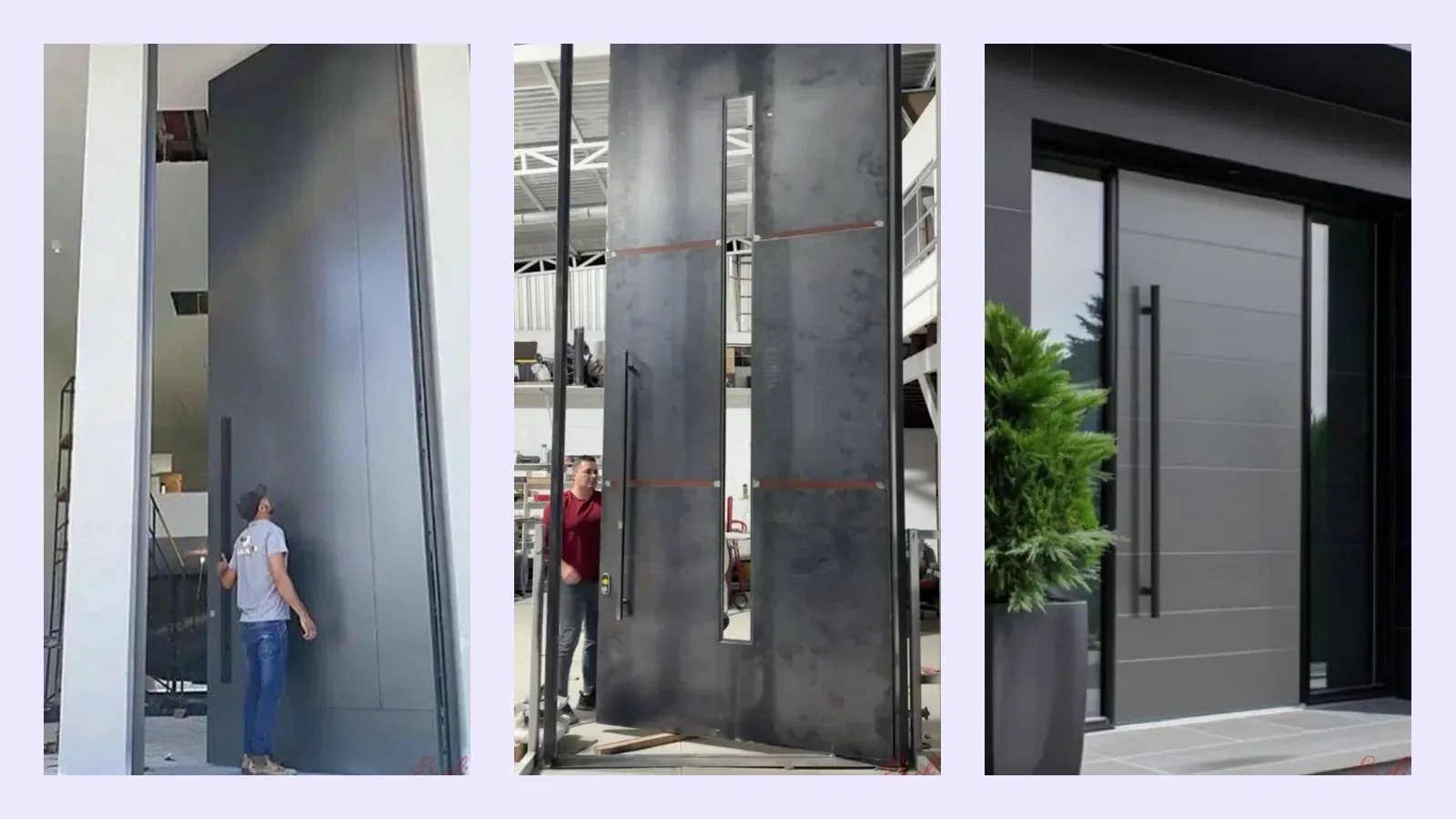
Choosing a door for a raw-concrete villa is a less forgiving exercise than choosing one for a classic facade. Industrial design language runs on subtraction: the moment you add ornament, the facade falls apart. A good door here isn't the one that grabs attention — it's the one that completes the facade's proportions.
In this style of architecture, a door's dimensions are its most decisive feature. In a tall-ceilinged entrance with a wide opening, a standard 100×210 leaf looks undersized — the door gets swallowed by the facade. There are two ways to fix this:
As the leaf grows, so does its weight, and a conventional hinge setup starts to struggle. At that point we switch to a pivot axis: the load rests on the top and bottom bearings instead of the hinges.
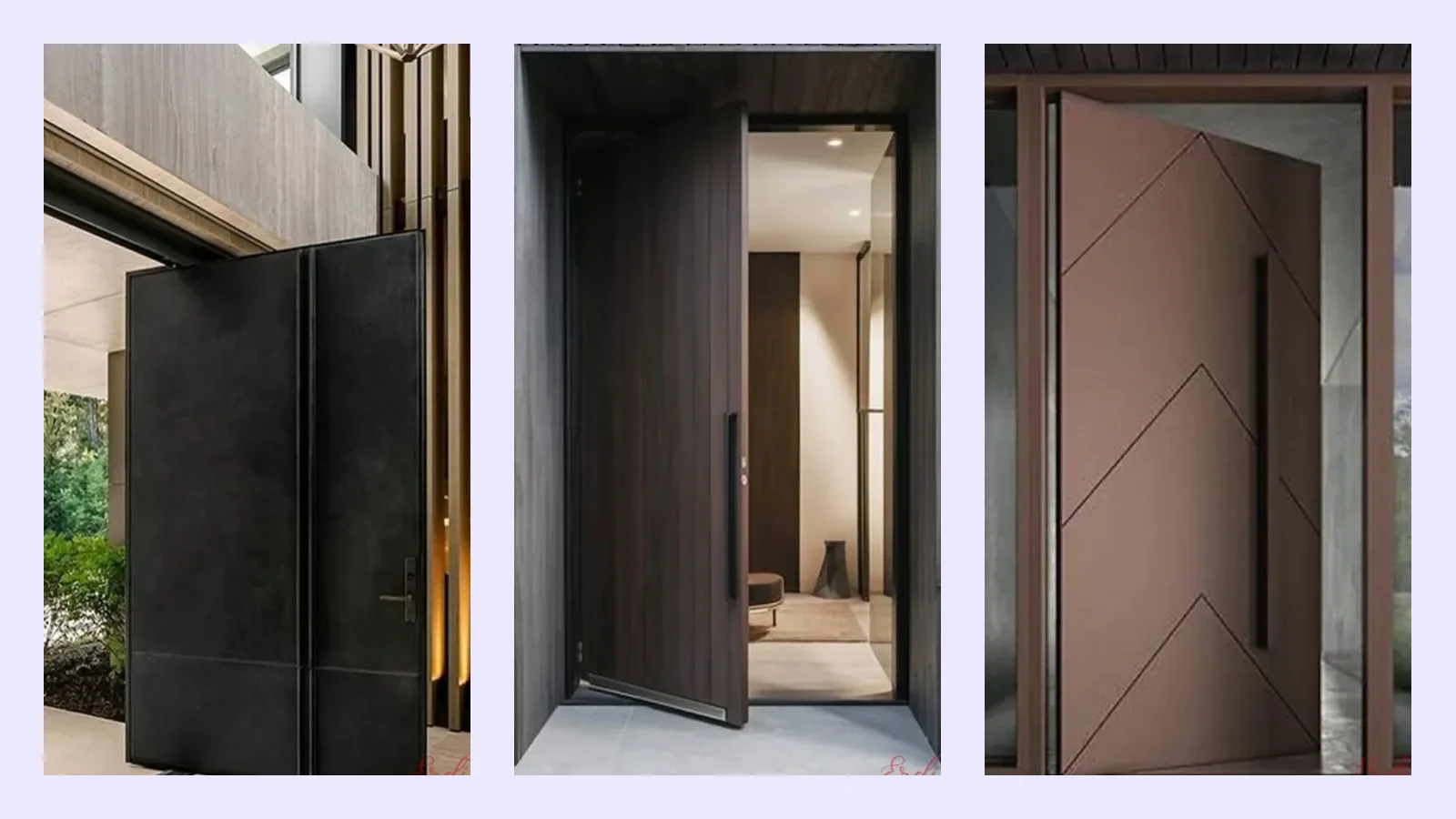
Raw concrete isn't just "gray" — depending on the pour, it can read as cool gray, warm gray, or beige-gray. The door color should be chosen to match the concrete's actual tone:
Wondering what your own door needs? Send a photo of your door and entrance via WhatsApp to 0532 689 21 46. In most cases we can tell just by seeing it; if a site survey is needed, it's free.
A glossy surface almost always looks wrong on an industrial facade — it reflects light and clashes with concrete's matte texture. Matte and semi-matte finishes should be the default. For the same reason, matte black, smoke gray, and brushed stainless work better here than gold or chrome fittings.
In industrial design, metal isn't decoration — it's a structural accent. The three details that work best:
| Detail | What it does | Watch out for |
|---|---|---|
| Horizontal steel band | Divides the leaf horizontally, emphasizes width | The effect dilutes as the number of bands grows |
| Long vertical handle | Stretches the leaf's height | Should stay proportional to the leaf's length |
| Narrow glass strip | Brings in light, breaks up the mass | Use frosted glass for privacy |
In this architecture, entrance lighting functions as part of the door itself. A slim LED strip recessed into the frame, or a wall light that washes across the surface, completely transforms the facade at night. The electrical line needs to be run before the door is installed — do it afterward, and a visible cable trace is unavoidable.
The detail that makes the biggest difference on an industrial facade is how the door relates to the wall surface. There are three options: the door can sit proud of the wall, flush with it, or recessed into it. In this language, flush and recessed setups almost always look cleaner; a proud frame reads as an extra line on a minimal facade.
A recessed setup requires leaving a niche during the shell construction stage — it can't be added later. If your project is still underway, discussing this now is a gain you can't recover once construction is finished.
Yes, and it often works well. Dark, matte, straight-grain wood textures pair well with concrete; glossy tones with a reddish cast feel out of place in this language.
Not with the right setup. What matters for a wide leaf is the hinge/pivot choice and how the frame anchors to the wall. We calculate the weight up front and build accordingly.
Heat loss does grow with surface area, that's true. That's why we keep the infill and gasket package above standard on wide leaves.
In this architecture, no decision can be made without seeing the facade. Send your project rendering or facade photo to 0532 689 21 46, and let's work through proportion and color together.
You can ask about your own door, your measurements or your specific area. Our production team reads these and answers here. If you'd like a faster reply, you can message us on WhatsApp.
The gap between two quotes usually comes not from the door but from what each quote does and doesn't include. These questions make a real comparison possible.
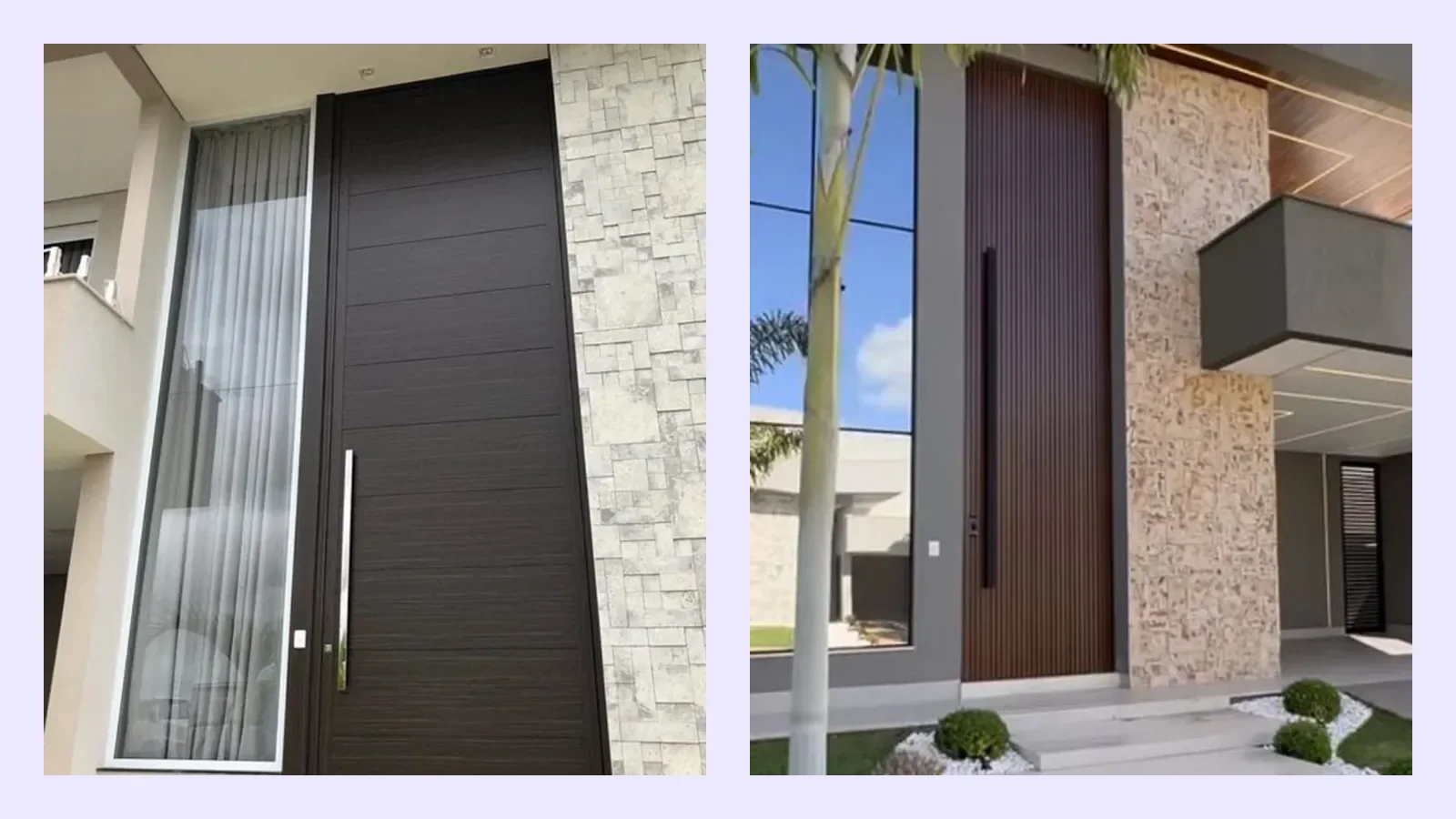
Choosing a door for a stone façade is about more than picking a color. The texture, the mortar joint color, and the geometry of the opening all need to be read together.