
GuideAugust 16, 2026
Steel Door Replacement: Renew the Existing Door, or Replace It?
Not every problem calls for a new door. When is recladding or a part swap enough — and when does the whole door have to go?
Our catalogue holds over 600 models, and we track which ones customers actually ask about throughout the year. What follows isn't fashion commentary — it's demand observation for 2026.
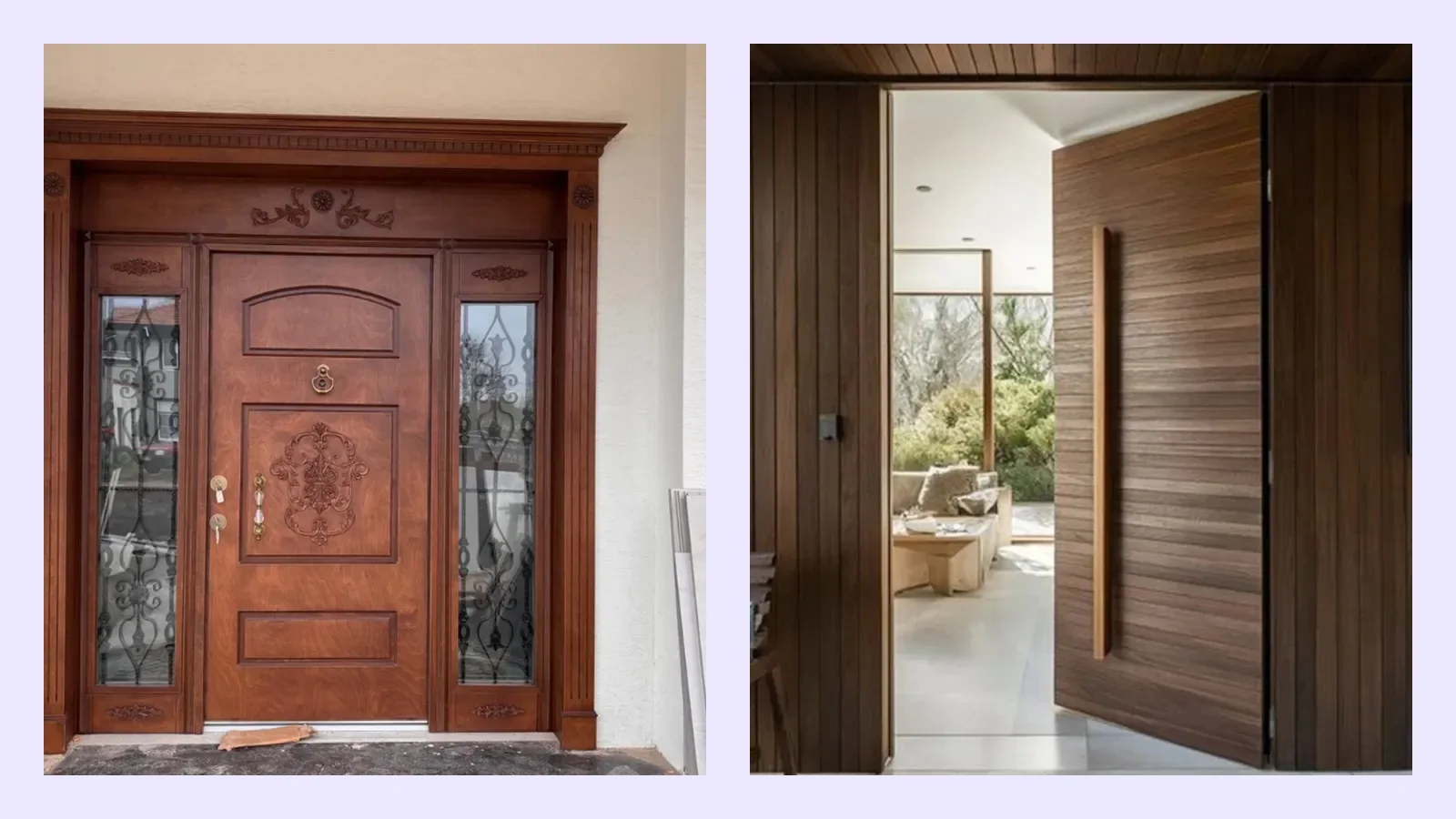
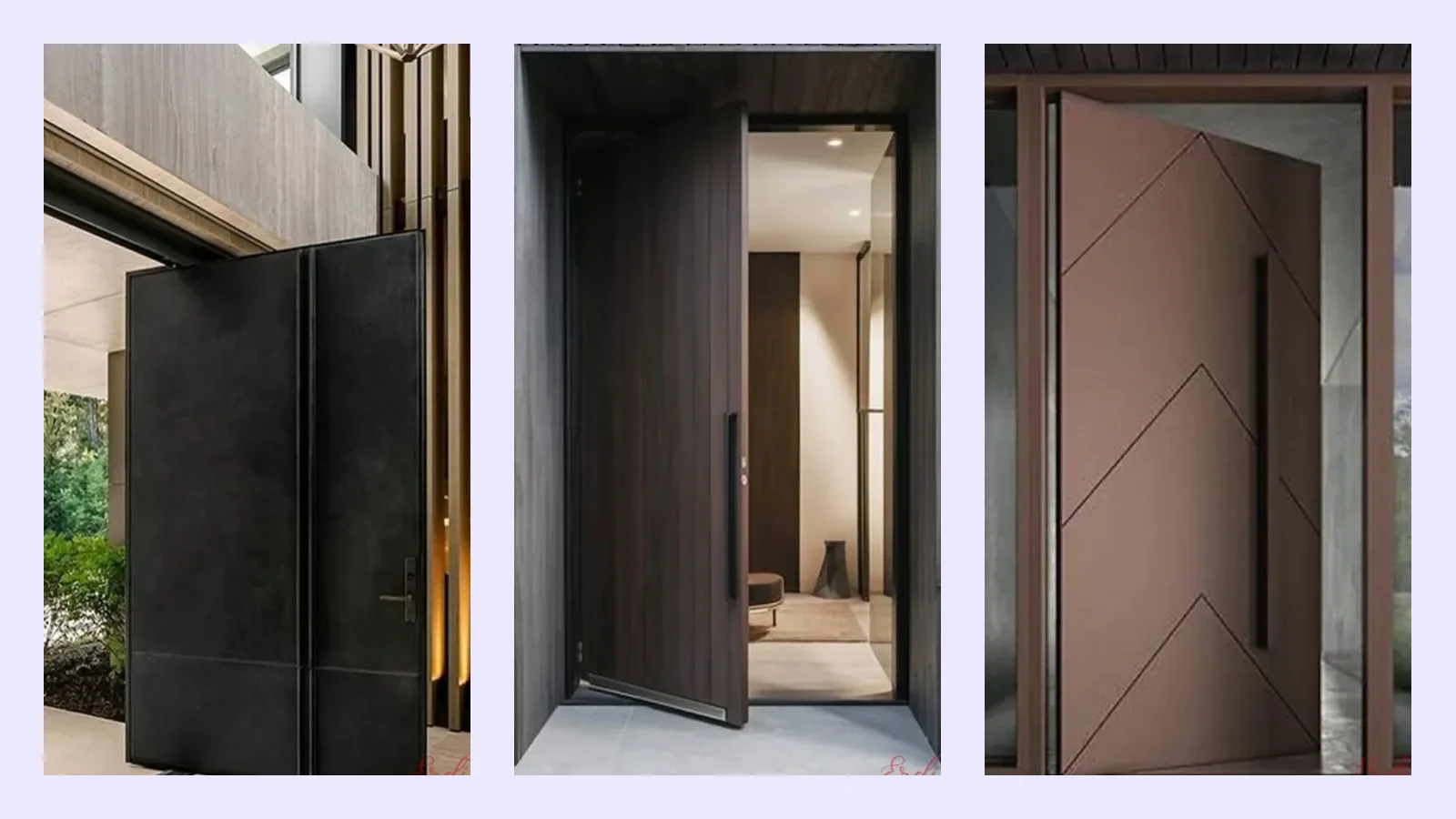
Carved, multi-panel classic patterns are giving way to flat or single-direction textured surfaces. Most requests now lean toward horizontal wood-grain and vertical lamella panels. Classic patterns haven't disappeared — they're still favored for building entrances and certain architectural styles — but on villa entrances, clean surfaces have clearly taken the lead.
Two trends are moving side by side: full-length vertical handles running the length of the leaf, and handles that vanish entirely into the surface. What they share is a desire for the door face to read as one uninterrupted plane. Classic knockers remain popular among customers after a traditional look.
This is the most tangible shift. A 100 cm width used to be standard; today, 120-140 cm widths and heights above 250 cm are common. In entrances with tall ceilings, we regularly hear "the door should run floor to ceiling."
There's a technical consequence: past a certain size, hinged systems start to struggle, and the pivot system takes over. The real driver behind rising pivot demand isn't fashion — it's sheer scale.
On one side: anthracite, smoke gray, and black. On the other: warm wood tones — walnut, honey, and reddish walnut. The neutral middle ground (beige, light gray) is asked for less. As accent colors, red, petrol blue, and mustard yellow see limited but steady demand.
Customers who want the look of wood without the maintenance are turning to compact composite. The shift is especially visible on exposed facades and near the sea. We compared the cladding types in a separate article.
Card and code access have become close to standard for building entrances. In residential settings, demand for fingerprint access is rising. One caution here: smart access is a layer of convenience, not a substitute for security. Underneath it, you still need a mechanical lock and multi-point locking.
Requests for LED strips embedded in the handle or a light line running along the leaf are increasing. The visual effect is striking, but a reminder is worth making: the wiring needs to be planned during installation — adding it later is difficult.
The body of the door. All of these trends are about the surface — pattern, color, handle, cladding. The part that actually does the door's job — steel sheet thickness, reinforcement, fill density, lock class, seal — isn't a matter of fashion, and it shouldn't be. The difference between a 2026 model and a 2016 model lies on the surface; both are built to the same standard.
So feel free to choose a model based purely on taste. You can browse all our models, and read the decision points in our selection guide.
A steel door stays in service for fifteen to twenty years. Today's most eye-catching pattern may look dated in five years, while a clean surface that suits the facade never really goes out of style. That's why we recommend a measured approach to following trends.
A practical rule of thumb: make bold choices in the elements that are relatively easy to change later — color and handle. For lasting decisions like the body structure and cladding type, prioritize durability and facade compatibility. That way you get today's look without regretting it five years from now.
Not on the body side. All our models are built to the same standard: the same sheet thickness, the same reinforcement, the same fill density, the same lock family. The difference across years is on the surface — pattern, color, handle, and cladding choice.
Yes. Every model code listed in the catalogue remains valid for production, and it's used in order and service records. Just give us the model code.
Visually it's striking, but ergonomics should be discussed during the site survey — grip ease matters especially for entrances used by children and older family members.
Technically yes, but for a clean result the wiring needs to be planned during production. Retrofitted solutions may require surface-mounted parts.
Yes. The color shown in the catalogue is just a sample application of that model; cladding and color choice are independent of model selection. In static paint, any color on the RAL chart can be applied.
No model in the catalogue has a fixed size — all of them are built to measure. Model choice determines the surface design, while the dimensions come from your own door opening.
No, we never keep any model in stock. Doors are manufactured to order, so there's no such thing as "out of stock" — timing simply depends on the production schedule.
Yes. Since we manufacture in our own factory, designs outside the catalogue are evaluated on a project basis. Once you send us a drawing or reference image, we review together whether it's buildable and how it affects the body structure; production starts once dimensions and cladding are decided.
Erdi Yavuz — Founder of Bayrakdoor Steel Door. Over 20 years of experience manufacturing steel doors. Production takes place at our own factory in Gaziosmanpaşa, Istanbul; measurement, manufacturing, and installation all stay with the same team.
You can ask about your own door, your measurements or your specific area. Our production team reads these and answers here. If you'd like a faster reply, you can message us on WhatsApp.
Not every problem calls for a new door. When is recladding or a part swap enough — and when does the whole door have to go?
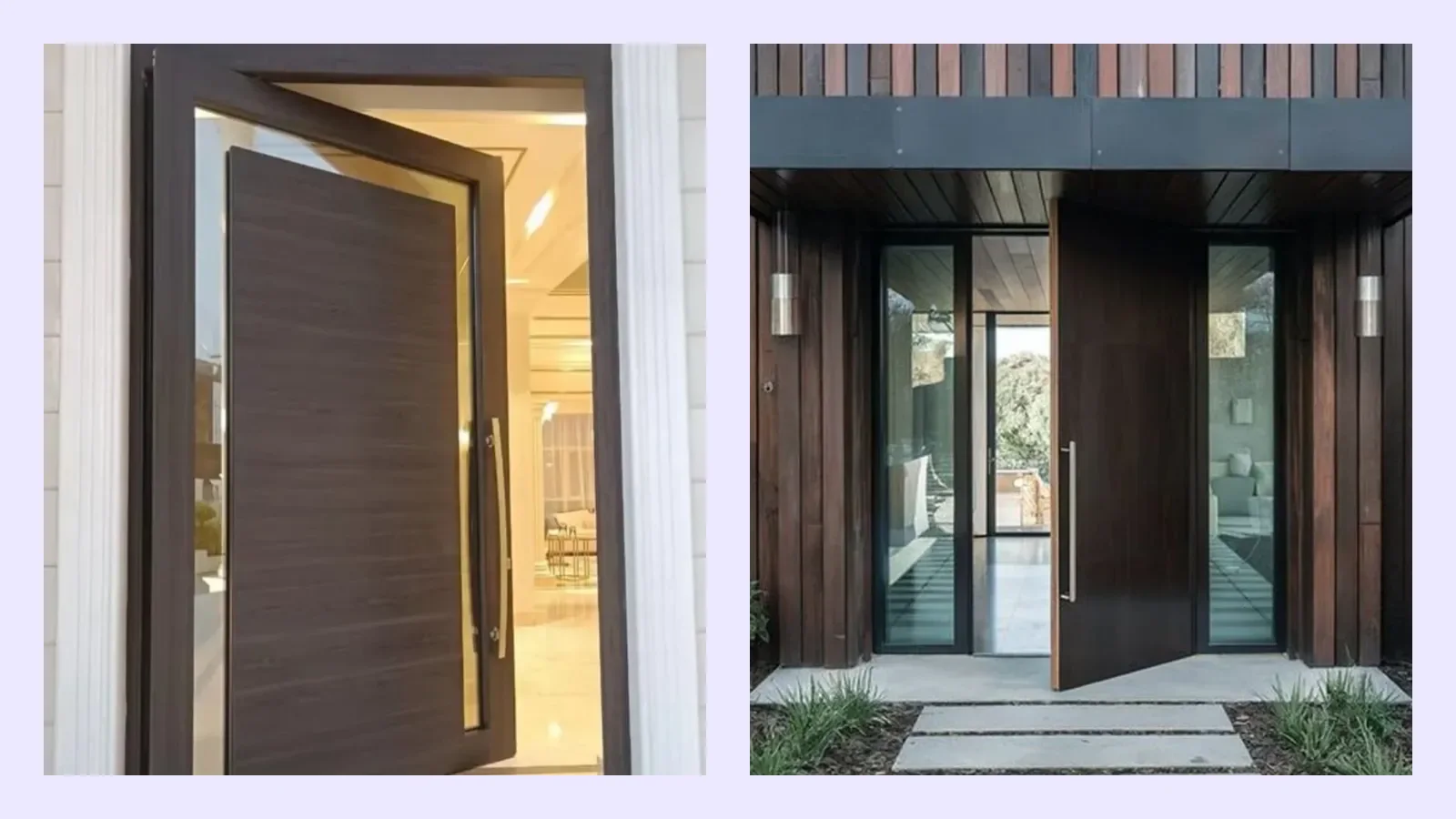
In a villa door, it's clear where costs can be trimmed and where they can't. Skimping on the body and lock cuts security directly — while cladding and glass choices leave real room to save.
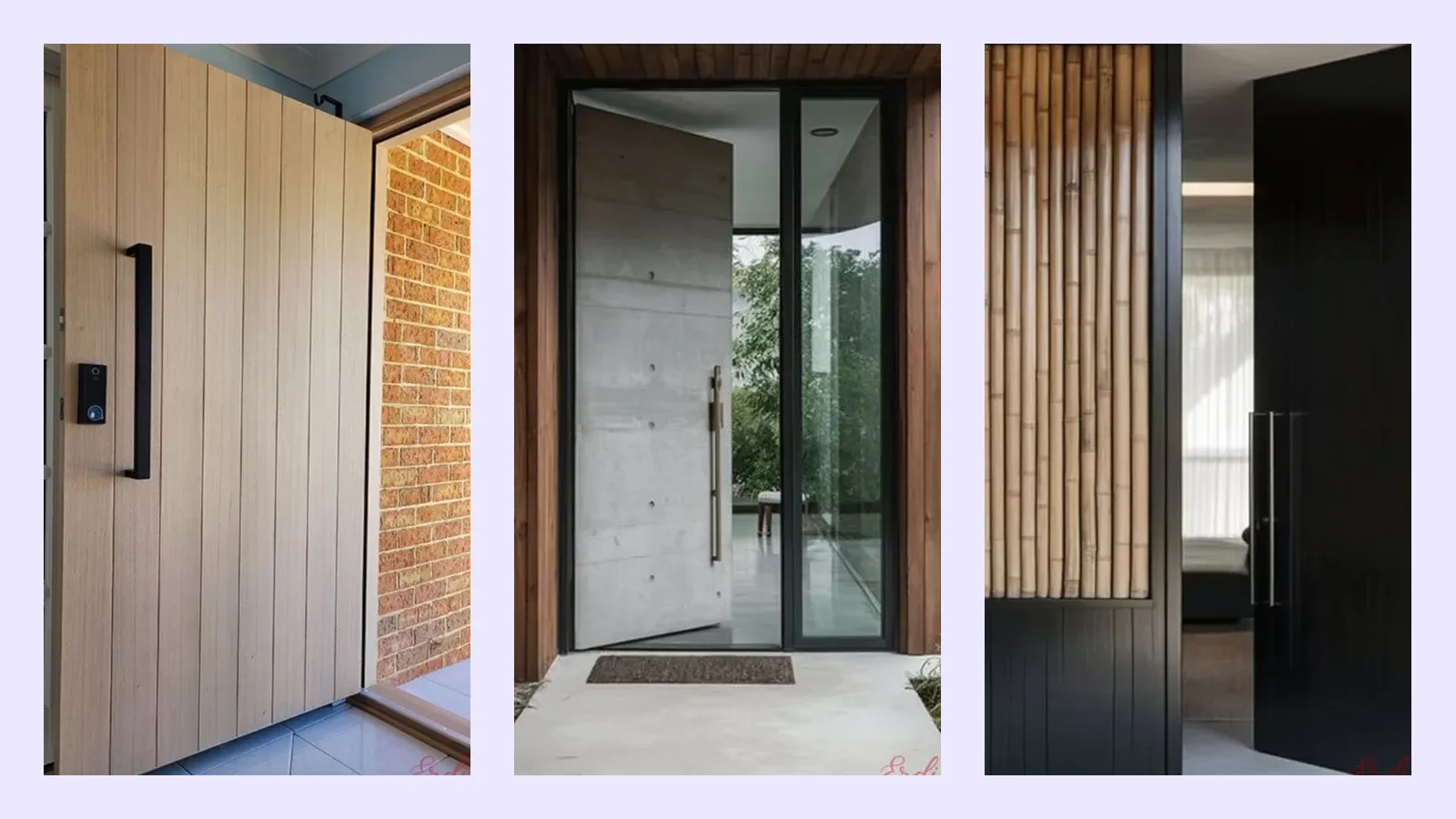
Clear trends are shaping villa entrances in 2026: wider leaves, surfaces that blend into the facade, hidden frames, and a growing appetite for natural texture.