
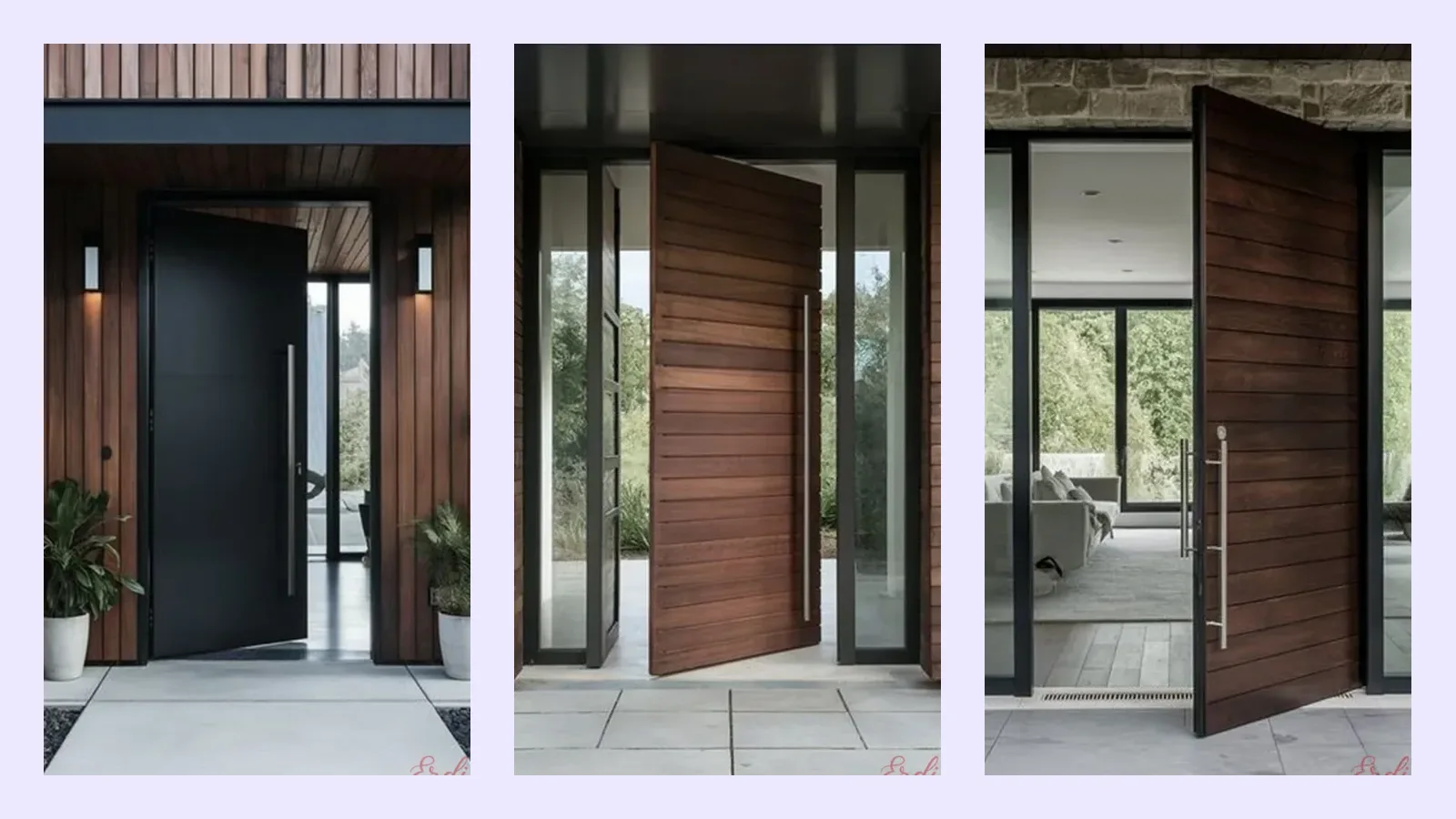
TechnicalAugust 19, 2026
Do Exterior Villa Doors Rust? Solutions That Stop Corrosion
Whether a steel door rusts depends not on the door itself but on the surface treatment and the local air. Where rust starts and how it's stopped.
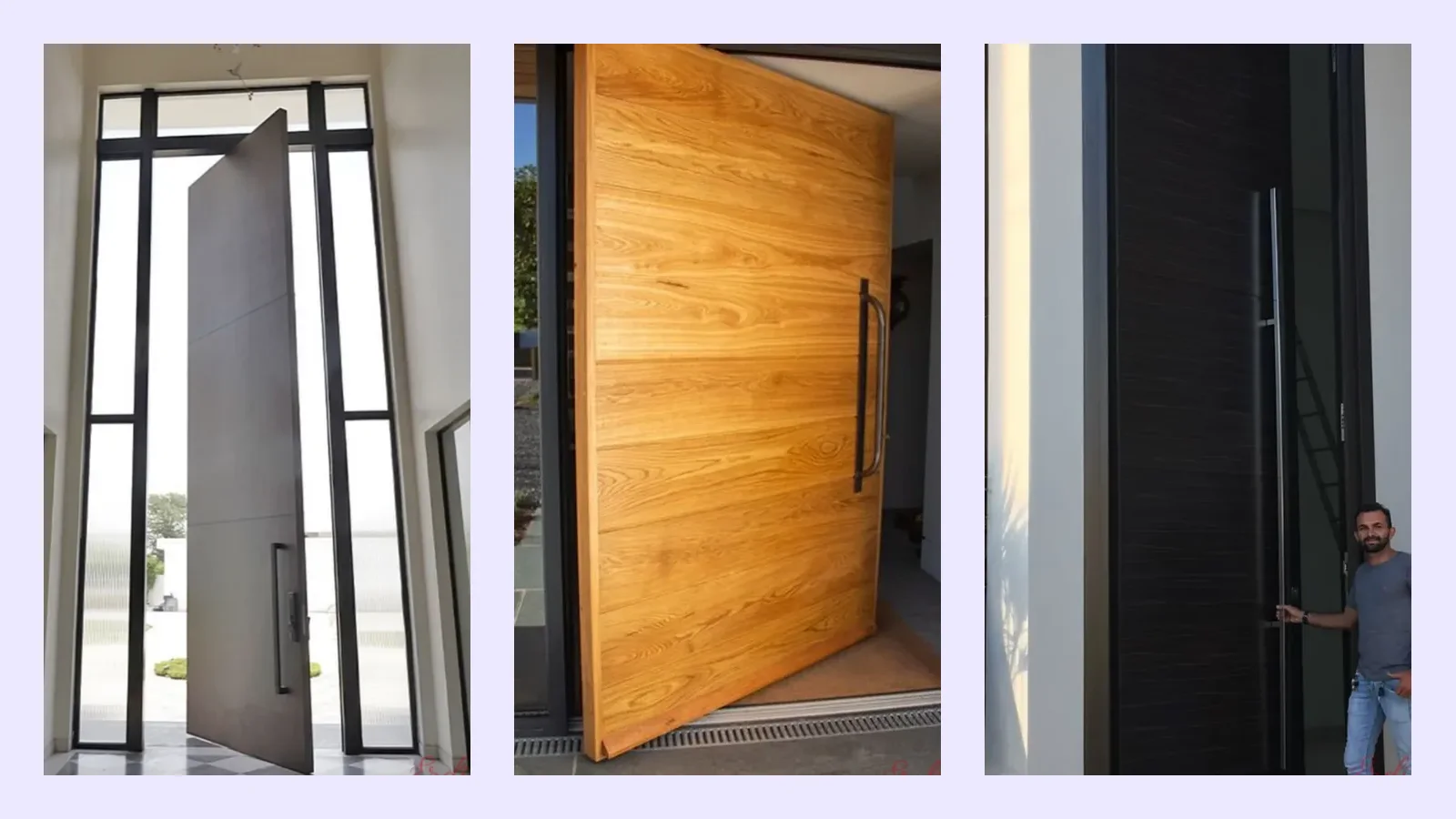
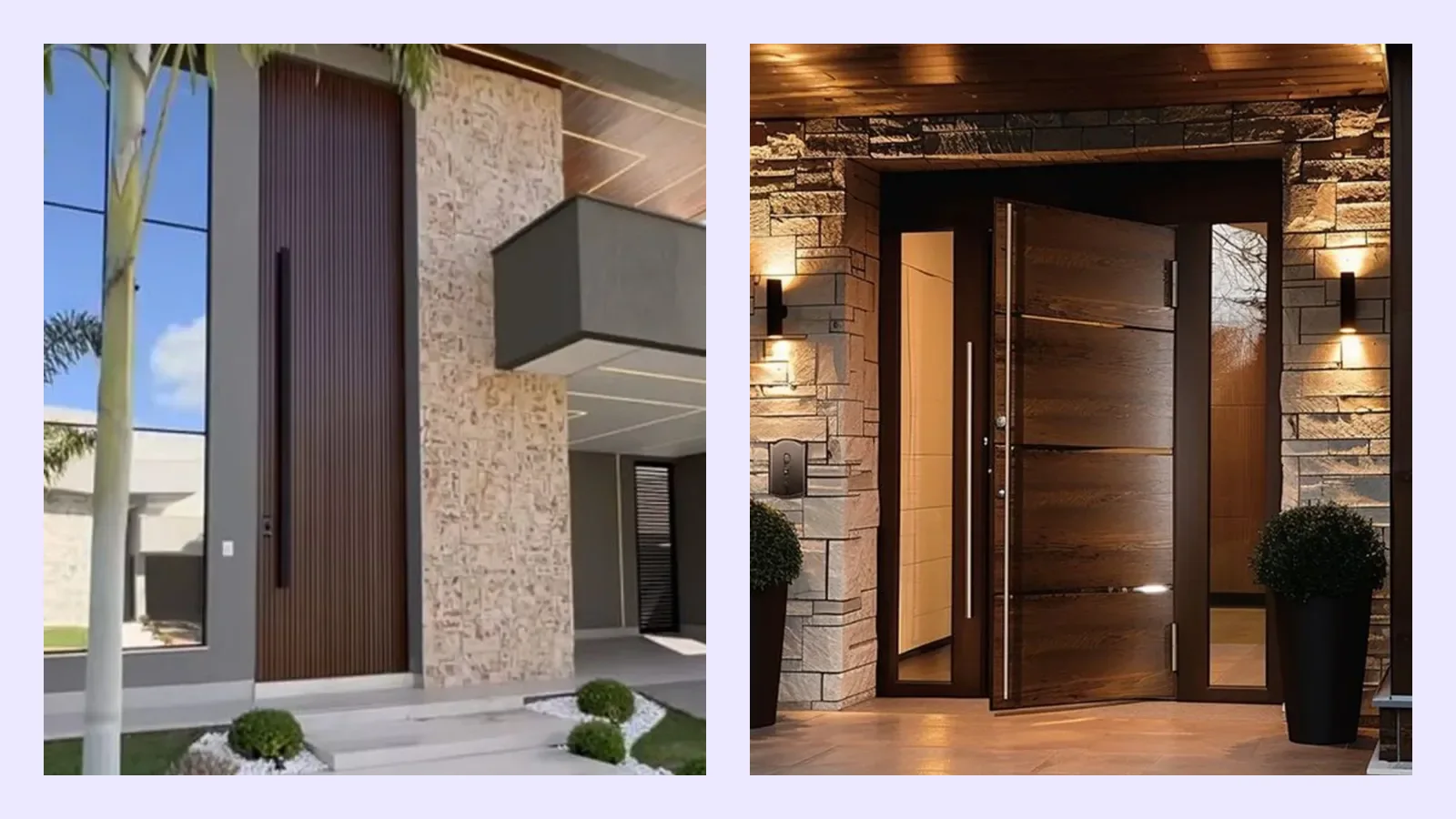
Entrance openings have grown in modern villa and residence architecture. A 100 cm width used to be the standard; today, 120-140 cm widths and heights above 250 cm are commonplace. These dimensions push the classic hinged system hard. In this article we explain where the limit begins and what happens once it's crossed.
The common misconception is that the limit is measured in centimeters. What actually decides it is leaf weight and the torque that weight exerts on the hinges. Take two leaves of the same width — one powder-coated, one clad in solid wood — and the second is significantly heavier and works the hinges much harder.
What drives the weight: sheet thickness, infill density, cladding type and thickness, and the glass area if any.
These show up not within months but usually within a few years — which is why they go unnoticed at installation.
Up to a certain range, this is enough. As standard we use three 20-size ball-bearing adjustable-pin hinges, with 5 mm flat-bar reinforcement in the hinge zone. The adjustable pin allows the leaf's alignment to be corrected after installation. But this too has a ceiling.
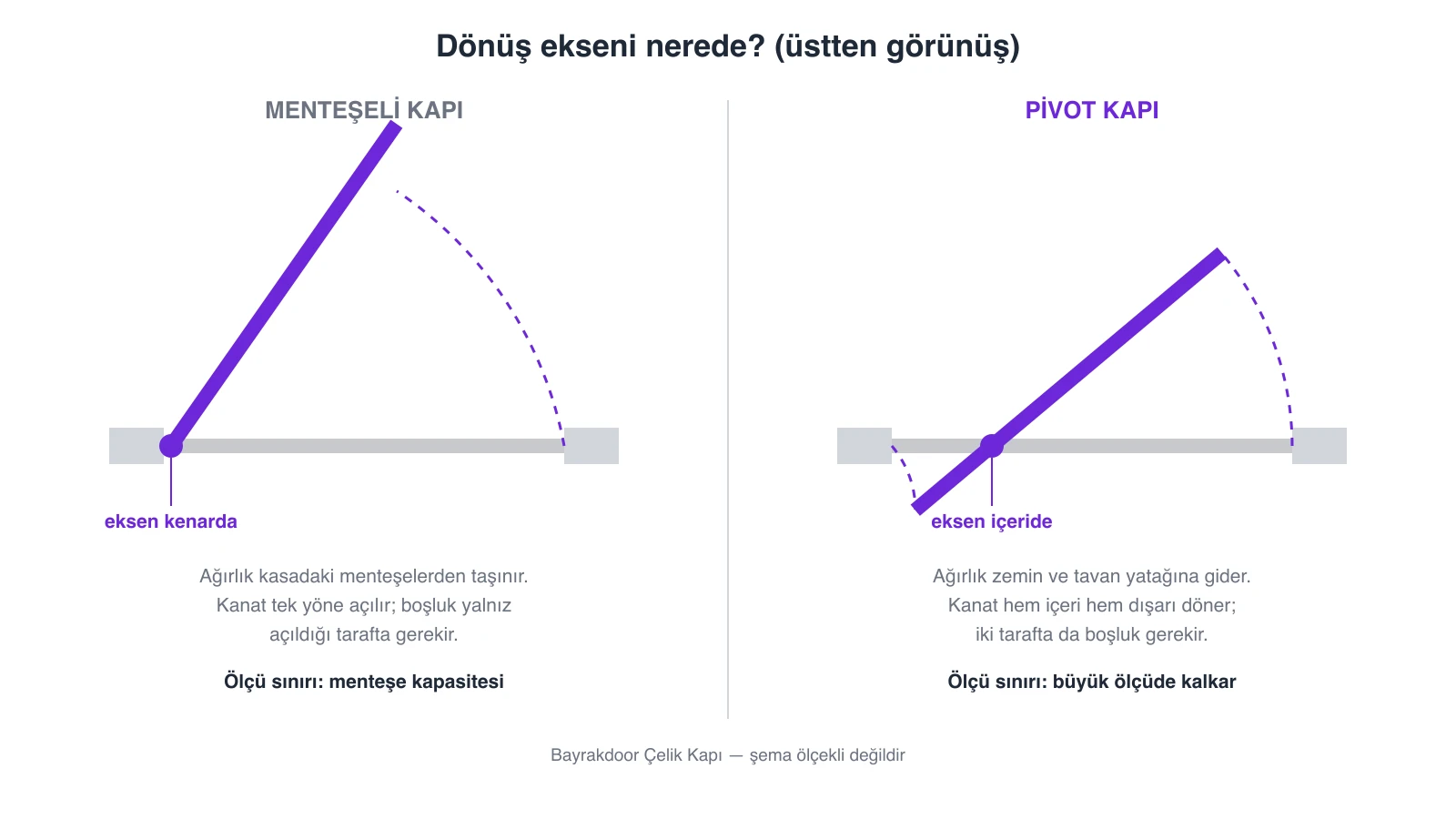
The weight transfers not to hinges but to floor and ceiling bearings. Since the floor carries practically unlimited load, the size limit largely disappears. This isn't "a stronger hinge" — it's a different load-bearing principle.
Two conditions come with it: the leaf swings both ways, so clearance is needed in front and behind, and the floor must be prepared for the bottom bearing. We went into detail in what is a pivot door.
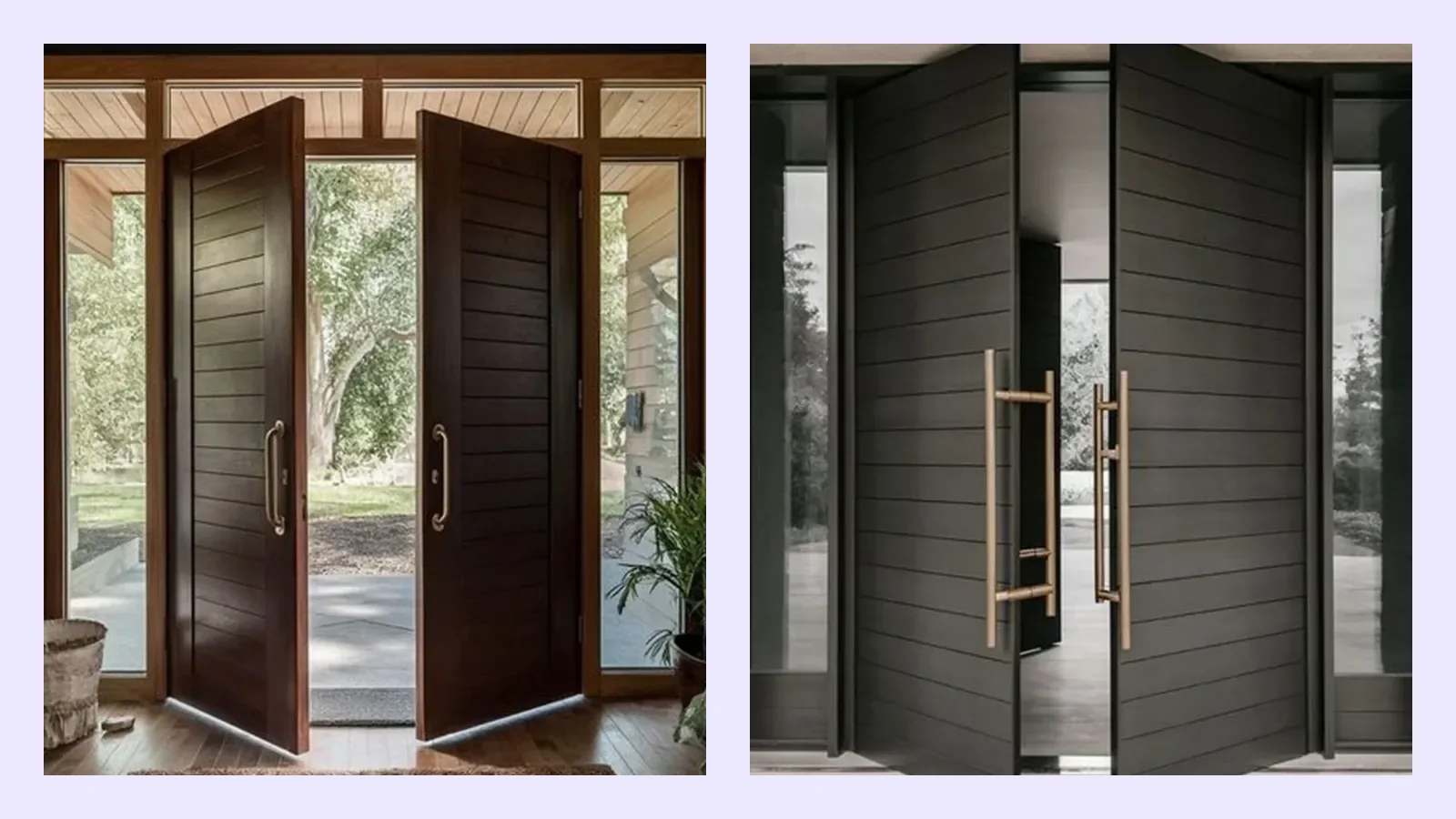
There's no obligation to make the entire wide opening a single leaf. The opening can be split into a moving leaf and a fixed side panel (glazed or solid). You get a visually generous entrance while the moving mass stays small. Where furniture moves are frequent, the second leaf is made openable.
| Situation | Recommendation |
|---|---|
| Standard size, normal cladding | A hinged system is enough |
| Wide but light cladding | Hinged system with reinforced hinges |
| Wide + thick/heavy cladding | Pivot |
| Very high ceiling, full-height leaf | Pivot |
| Wide opening, narrow landing | Fixed panel + regular leaf |
The exact limit is set project by project; dimensions, cladding and floor condition are assessed together. Our free site survey looks at all three. Browse our pivot models.
The topic most often skipped with oversized doors is whether the leaf can actually be carried to the entrance. A leaf 140 cm wide and 260 cm tall won't fit through a narrow stairwell or a standard elevator. At villa entrances this is rarely an issue; on upper floors or in tight-street neighborhoods it needs planning in advance.
This is why we check it at the site survey: the access route, turning angles, elevator dimensions, and crane needs if any. These should be known before the order — not on installation day.
Giving a single upper limit wouldn't be right; the limit depends on the leaf's weight and the load-bearing system chosen. A pivot system allows noticeably wider and taller leaves than a hinged door; the exact dimensions are set project by project.
Not if the right system was chosen. Sagging appears when leaf weight exceeds the carrying capacity. That's why cladding selection and the weight calculation come before the load-system decision.
A properly installed pivot door opens with one hand despite its weight — the load transfers to the floor and bearing friction is low. If it's hard to open, something is off in the bearing adjustment or alignment.
It depends on use. Where furniture moves are frequent, a double leaf is practical. If the architecture calls for one uninterrupted surface, a single large leaf is the choice — and that usually means a pivot system.
It can. As the leaf gets taller, how the locking points are distributed starts to matter; locking concentrated in one zone leaves play at the top and bottom corners of a tall leaf. That's why large leaves get a multi-point system.
The maintenance items are the same, but the bearing/hinge check matters more; on a heavy leaf, a small alignment drift turns into dragging quickly. A yearly check is enough.
A properly installed pivot door swings with little force despite its weight, because the load transfers to the floor and bearing friction is low. On a hinged system a heavy leaf can be a struggle — which is factored into the system choice.
Erdi Yavuz — Founder of Bayrakdoor Steel Doors. Over 20 years of steel door manufacturing experience. Production takes place at our own factory in Gaziosmanpaşa, Istanbul; measurement, manufacturing and installation belong to the same team.
You can ask about your own door, your measurements or your specific area. Our production team reads these and answers here. If you'd like a faster reply, you can message us on WhatsApp.
Whether a steel door rusts depends not on the door itself but on the surface treatment and the local air. Where rust starts and how it's stopped.
If the door catches while closing and the latch struggles to find its socket, the leaf has sagged. What causes sagging, and can adjustment fix it.
Rainwater getting in under the door isn't a gasket problem — more often than not it's a threshold and drainage problem. What does the right threshold setup look like?