
TechnicalAugust 19, 2026
Do Exterior Villa Doors Rust? Solutions That Stop Corrosion
Whether a steel door rusts depends not on the door itself but on the surface treatment and the local air. Where rust starts and how it's stopped.
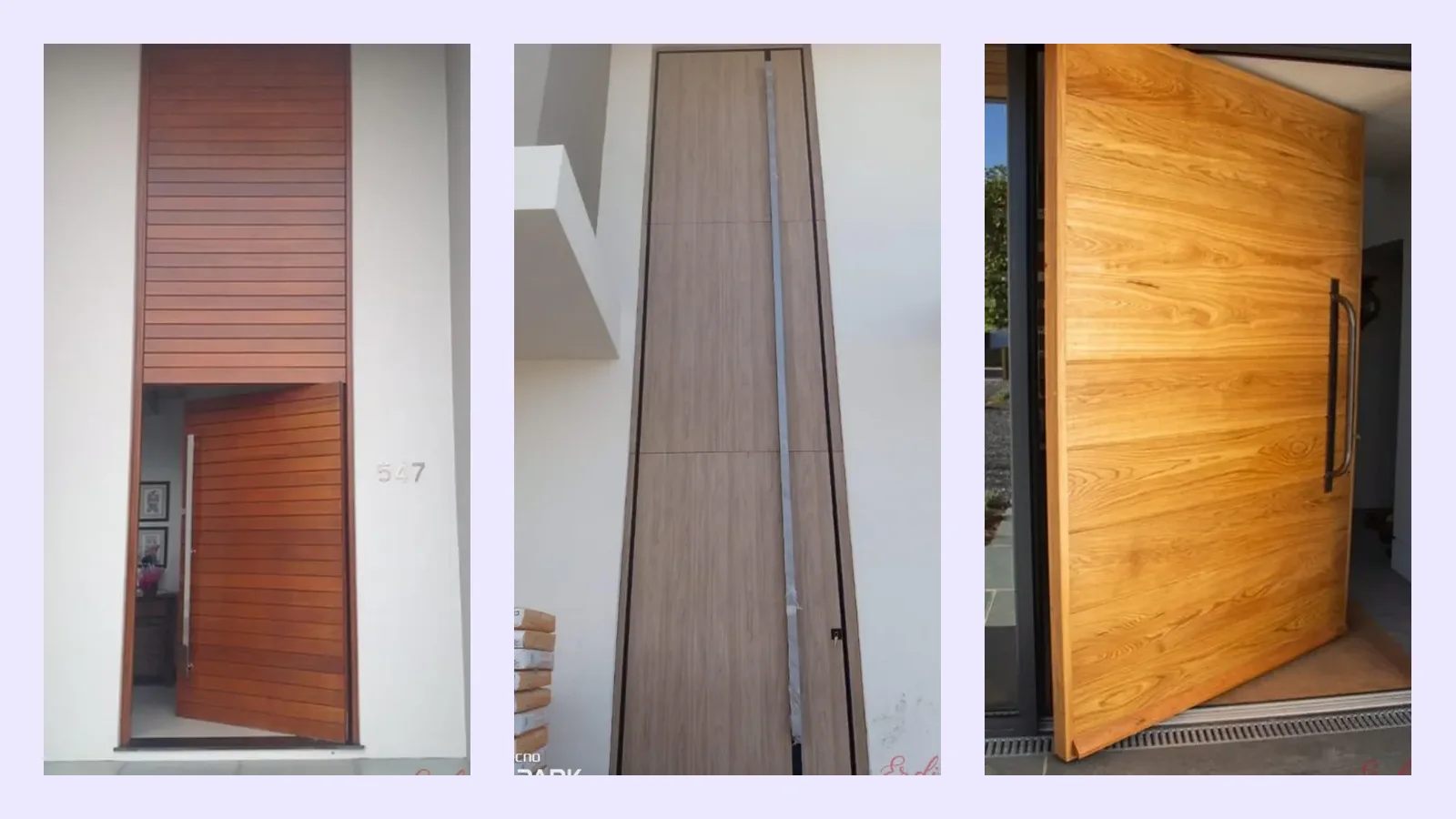
When shopping for a steel door, you'll keep running into sizes like 90x200, 96x205 and 100x210. These aren't mandatory dimensions set by a standards body; they're common sizes that mass producers settled on to cut tooling costs. The distinction matters, because your door opening is under no obligation to match them.
In Turkish apartment projects, flat entrance door openings are mostly left at 90-100 cm wide and 200-210 cm high. Mass producers reduce that range to a handful of molds. Villa entrances have no such pattern — every project produces its own dimensions; widths of 110, 120 and 140 cm and heights of 220-260 cm are common.
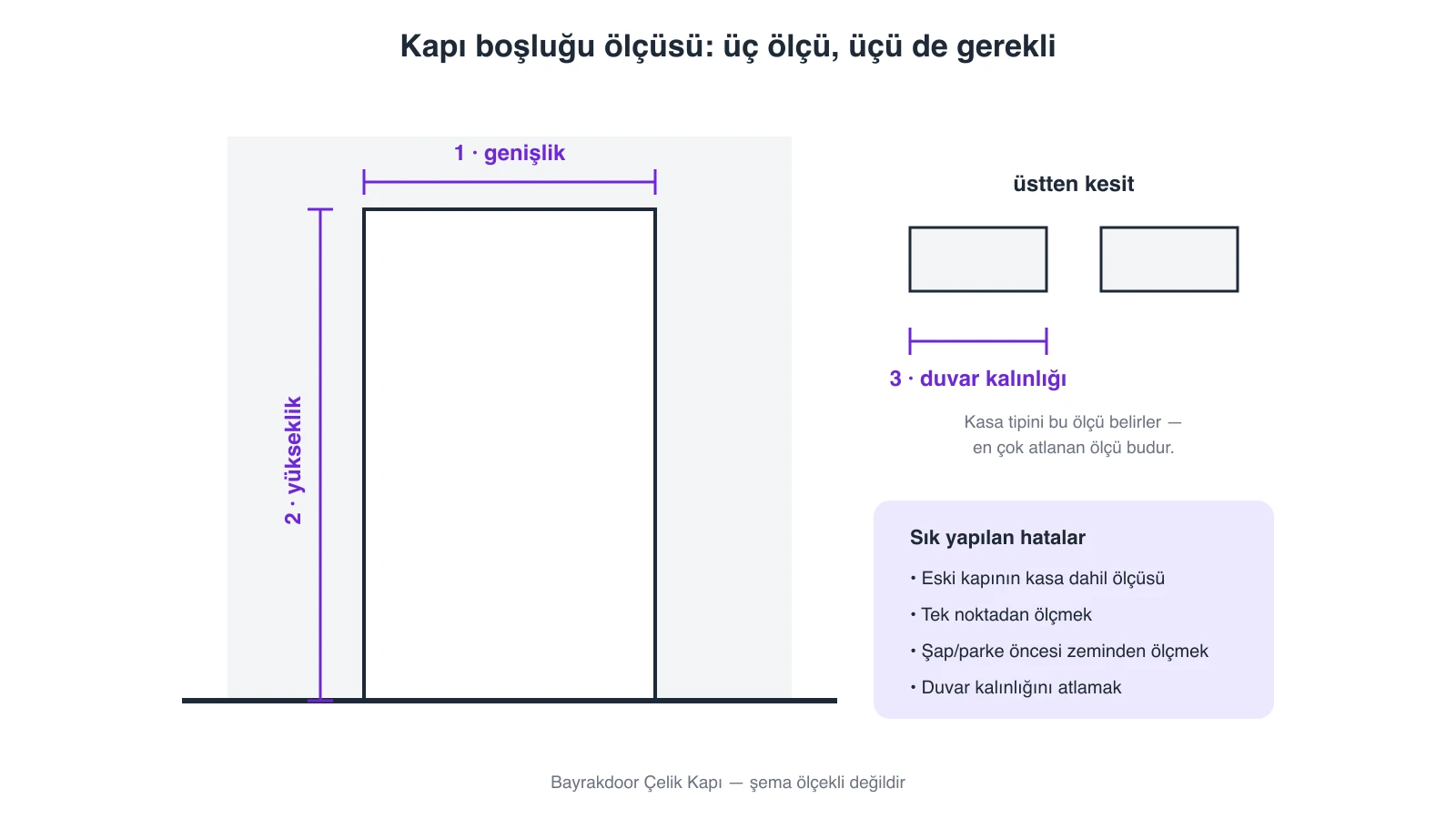
A door measurement isn't a single number:
The third is the one most often skipped. Wall thickness determines the frame type; measured wrong, the frame won't grip the wall and the gap has to be packed with filler. We laid out what to watch for during measuring, step by step, in our measuring guide.
If your opening is 104 cm and the off-the-shelf door is 100 cm, the 4 cm gap gets covered with something — usually polyurethane foam and a trim profile. Three consequences follow:
The frame is cut and folded to the actual dimensions of the opening. Here's how production runs for us: three measurements are taken at an on-site survey, the installation conditions are assessed, then the frame and leaf are manufactured to those dimensions. The one-piece inner and outer frame grips the wall in a clamping vise arrangement and is fixed with M8 bolts; the 1 cm left between frame and wall is filled with polyurethane.
That's why our site has no list of standard sizes and prices — every door we build is one of a kind. We explained what determines the cost in our pricing guide.
In a pivot system the leaf's weight is transferred to the floor, so the size limits you hit with hinged doors largely disappear. This is the system that comes into play for wide, tall entrances. But pivot doors need one extra measurement: how much clearance there is in front of and behind the door for the leaf to swing. We compared pivot versus hinged doors in a separate article.
| Measuring the old door | That includes the frame; what's needed is the clear opening size |
|---|---|
| Measuring at one point only | Openings are rarely square; measure at three points and use the narrowest |
| Measuring from an unfinished floor | If screed or flooring raises the level later, the door will drag |
| Skipping wall thickness | The frame type is determined by this measurement |
These mistakes disappear with a free site survey — our team takes the measurements and the responsibility is ours.
As the size grows, it isn't just the amount of sheet metal that increases; the leaf's weight and the torque that weight puts on the hinges grow too. That's why wide leaves change the number and type of hinges — sometimes even the lock system gets re-specified. Size isn't a "dimension preference"; it's an input that affects the door's entire engineering.
In practice we follow this order: measure the opening first, then choose the cladding (it directly affects weight), then calculate the leaf weight and specify the load-bearing system accordingly. Choosing the cladding independently of the size can turn weight into a problem later.
You can for a rough idea, but the order shouldn't be placed on that measurement. A wrong measurement counts as an ordering error, not a manufacturing defect, and the responsibility stays with whoever provided it. With us, our team takes the measurements and the responsibility is ours.
Almost no door opening is. We measure at three points and use the narrowest; the frame is built to that and trued up with a level and plumb line during installation.
It's calculated from the finished floor level. If this isn't flagged, the door can drag on the floor after installation — it's one of the questions we always ask at the site survey.
In made-to-measure production there's no such category as non-standard; every door is built to its own dimensions anyway. What raises the cost isn't an unusual size but a bigger one — more material and more labor.
The opening can be split into a moving leaf and a fixed side panel, or a single large leaf can be built on a pivot system. The decision depends on how you use the entrance and the clearance in front of the door.
As low as possible; a tall threshold is both a tripping hazard and an accessibility problem. On the other hand, exterior doors need a detail that keeps water out; the two are balanced through gasket and threshold profile selection.
Before production starts, yes. Once production begins, the frame and leaf are cut to those dimensions, so a change means a new build. That's why measurement approval is taken in writing.
Erdi Yavuz — Founder of Bayrakdoor Steel Doors. More than 20 years of experience in steel door manufacturing. Production takes place at our own factory in Gaziosmanpaşa, Istanbul; measuring, production and installation are handled by the same team.
You can ask about your own door, your measurements or your specific area. Our production team reads these and answers here. If you'd like a faster reply, you can message us on WhatsApp.
Whether a steel door rusts depends not on the door itself but on the surface treatment and the local air. Where rust starts and how it's stopped.
If the door catches while closing and the latch struggles to find its socket, the leaf has sagged. What causes sagging, and can adjustment fix it.
Rainwater getting in under the door isn't a gasket problem — more often than not it's a threshold and drainage problem. What does the right threshold setup look like?